How to change from G to C on guitar
Move slowly enough that the whole C shape lands cleanly. Practise the movement alone before putting it back into a song.
Quick answer
To change from G to C, release the G shape, keep the fingers close to the strings, lead toward the C shape, and land ring, middle, then index without squeezing.
- Keep fingers close to the strings
- Aim for the C shape before strumming
- Count only clean transitions
Compare the G and C hand shapes
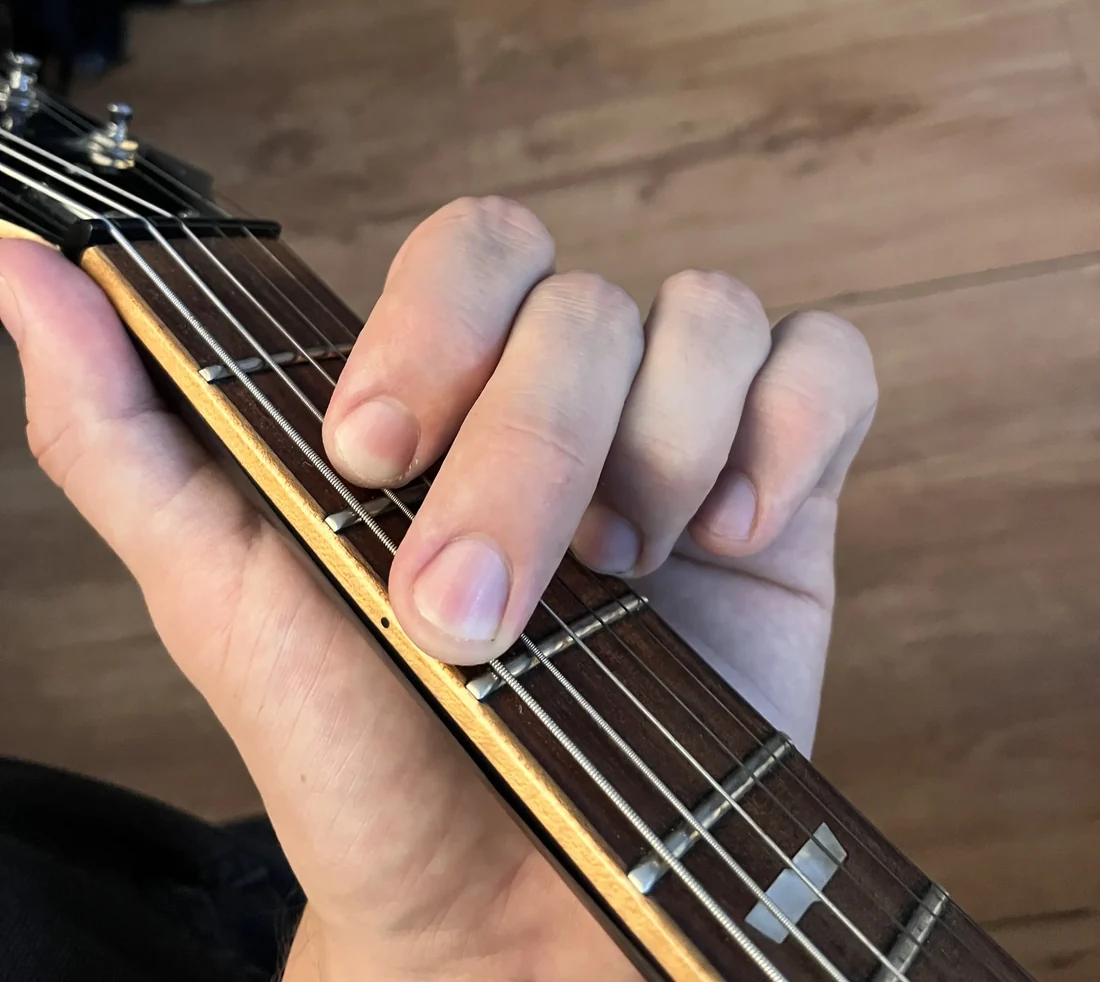
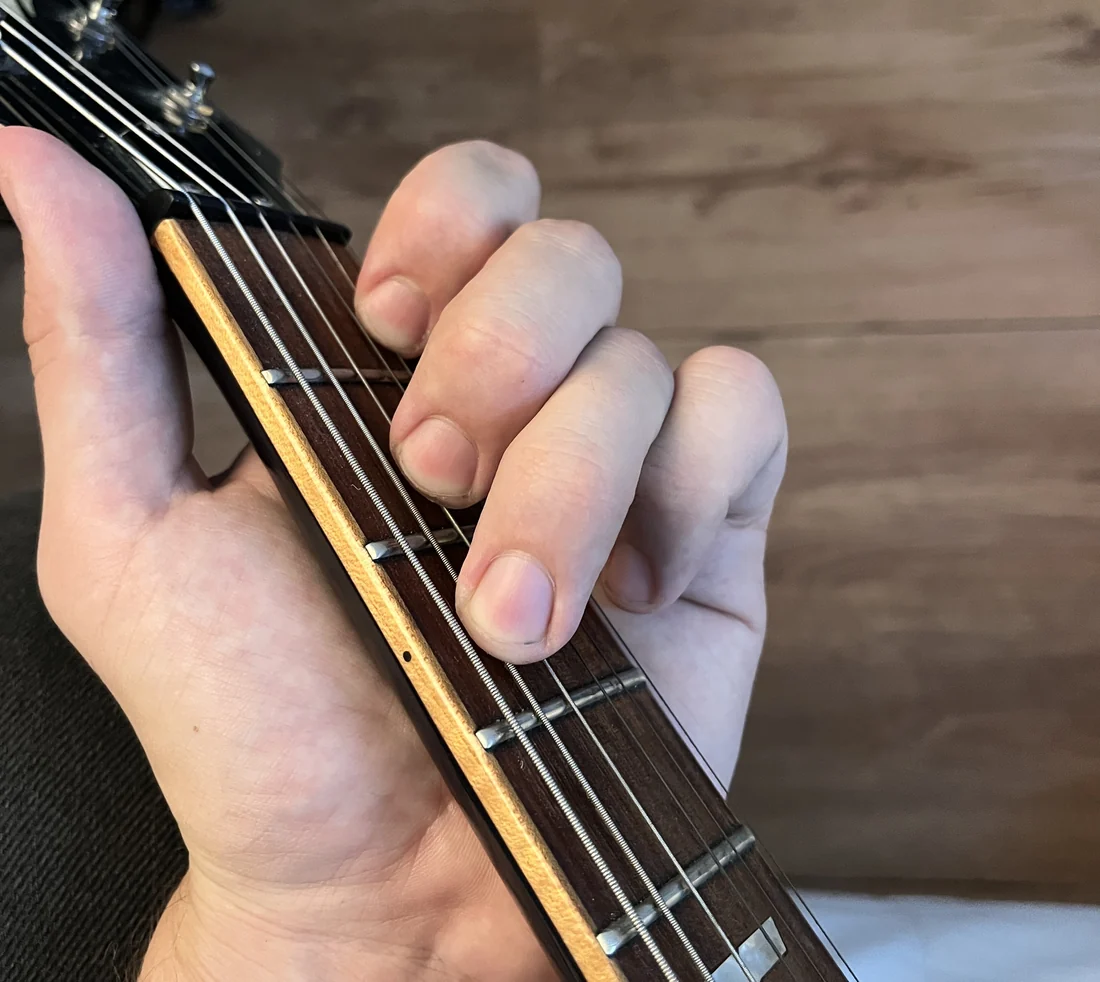
The pause usually happens before C
G feels open and wide, while C needs three fingertips in a diagonal line. Give the hand time to aim before the next strum.
Leave G calmly
Release pressure before lifting so the hand does not jump away.
Lead toward fret 3
Aim the ring finger for the A string at fret 3.
Complete the diagonal
Middle goes to D fret 2, index to B fret 1.
Start the strum from A
Do not hit the low E string in the standard C shape.
Step by step
1. Build G and strum once
Listen for six clean strings.
2. Release without throwing the hand away
Lift only enough to clear the strings.
3. Build C slowly
Aim ring, middle, then index while the fingers stay curved.
4. Check C from the A string
Count the change only when the chord rings clearly.
5. Repeat for 60 seconds
Save the clean score and try to beat it another day.
Train the arrival, not the hold
Holding C for a minute does not practise getting there. Release G, build C, check it once, then repeat the movement.
Useful next pages
Common questions
Why is changing from G to C so hard?
The shapes use different parts of the neck and C needs accurate finger angle so two open strings keep ringing. Slow repetitions teach the landing.
Which finger should move first from G to C?
Aim the ring finger toward A string fret 3, then complete the C diagonal with middle and index. The whole hand should still move as one calm action.